
Short answer: no. Day trading is not a reliable, repeatable or safe method to eliminate debt for most retail investors. The activity is high variance and carries structural costs that usually overwhelm realistic return expectations, especially when the trader is also carrying consumer debt with significant interest. When you are servicing debt, losses have consequences beyond the account balance: they increase interest expense, worsen credit standing, and constrict options for meeting fixed obligations. The only defensible guideline is simple and strict: trade only with money you can afford to lose. Using trading as a strategy to rescue yourself from debt is economically and behaviorally unsound in nearly every common scenario.
The remainder of this article explains why. It covers practical mechanics of day trading, the arithmetic that destroys many recovery narratives, how leverage and forced exits amplify losses, the psychological pathways that make indebted traders take outsized risks, and practical alternatives that are both safer and more predictable for debt reduction.
If you want to learn more about day trading in general, then I recommend that you visit the website DayTrading. DayTrading.com is a website completely devoted to day trading, featuring thousands of articles and guides on day trading, as well as hundreds of day trading broker reviews.
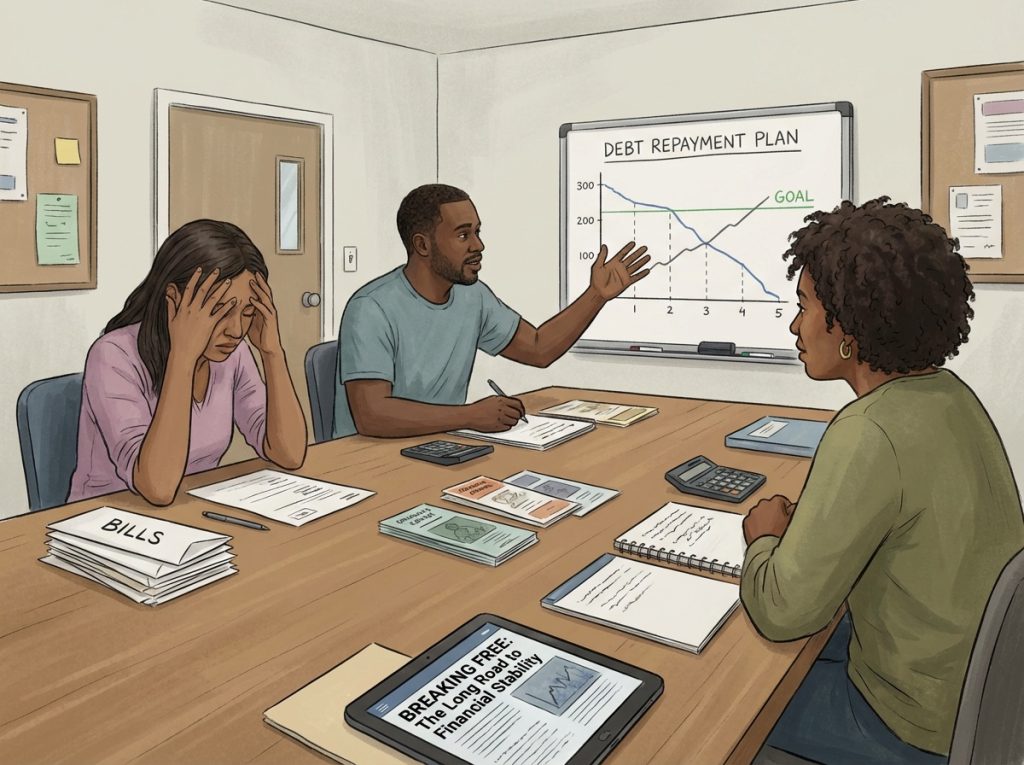
How day trading works in practice — mechanics that matter to indebted traders
Day trading is an umbrella term for frequent intraday buying and selling of liquid instruments such as stocks, futures, options or exchange traded funds. The distinguishing features are short holding periods, reliance on intraday liquidity, and execution frequency. For an indebted trader a few mechanics matter more than the trading strategy itself.
Margin and leverage allow a trader to control positions larger than their account equity. Brokers require initial and maintenance margin. If account equity falls below the maintenance threshold, the broker issues margin calls and may liquidate positions without consent. That forced selling often occurs at poor prices and converts unrealized losses into realized ones.
Transaction costs are not trivial. Commissions, exchange fees, spread costs, and slippage reduce gross returns. For strategies that rely on small intraday moves those costs can consume the majority of the edge. High frequency in a small account means fees are a larger fraction of capital.
Tax treatment matters. Most day trading gains are short term and taxed as ordinary income. That tax drag reduces net returns, which is important when comparing trading outcomes with the guaranteed return produced by paying down high cost debt.
Liquidity and execution risk are also salient. Markets are not uniformly liquid. During stress events spreads widen and fills become uncertain. Traders who depend on intraday gains to meet debt payments can be caught by settlement lags and execution delays. If a trader expects to convert account equity to cash within a day to make a critical payment, settlement rules or broker processing times can break that plan.
Finally, margin interest and borrowing costs add fixed charges to the cost of using leverage. These interest costs exist whether trades win or lose and therefore raise the necessary gross return to make trading economically worthwhile compared to debt reduction.
The arithmetic: expected value, fees, taxes, and the debt interest hurdle
Most arguments for using trading to escape debt rest on the hope of outsized returns. Those hopes fail once realistic costs and probabilities are applied.
Begin with expected value. Suppose a trader believes they have a strategy that wins 55 percent of trades and loses 45 percent. If the average winner returns 0.9 units and the average loser costs 1 unit, the expected return per trade is:
0.55 × 0.9 − 0.45 × 1 = 0.495 − 0.45 = 0.045 units, or 4.5 percent per trade before costs.
That looks positive. In practice however fees and slippage will reduce the 0.9 and increase the 1. Transaction costs transform a positive-looking edge into a negative one. For intraday strategies with many trades, even modest per trade cost quickly erode gross returns.
Compare this to debt interest. If you carry unsecured consumer debt at 18 percent a year, paying that balance down yields a guaranteed, risk free after tax return approximately equal to the interest avoided. For a trader to justify taking risk with borrowed or earmarked funds, the trader’s net expected annualized return must exceed the debt interest plus taxes and trading costs. That is a high bar.
Concrete example. A trader has $10,000 in credit card debt at 18 percent APR. They decide to keep the debt and use $5,000 of separate capital to day trade. Suppose over a year their gross trading return is 30 percent — unusually high for most retail strategies. Net of trading costs and taxes it might be closer to 18–22 percent. At first glance 22 percent beats 18 percent. But this ignores several realities. First, that 30 percent gross is unlikely to be steady; it will include large drawdowns and periods of underperformance that can coincide with liquidity problems or margin calls. Second, to actually realize that return you must maintain capital exposure through drawdowns; drawdowns reduce the absolute dollar cushion available to service debt. Third, if the trader uses margin or borrows to increase position size, the additional interest expense and the increased probability of forced liquidation change the comparison. Finally, the time value and certainty of paying down debt immediately eliminates future compounding of interest on that balance. Mathematically, paying down high interest debt is equivalent to a guaranteed, after tax return equal to the interest rate avoided, which is often comparable to or higher than what most retail day traders can reliably generate net of costs.
Loss recovery math compounds the problem. A 30 percent drawdown requires roughly a 43 percent gain to recover. A 50 percent drawdown requires a 100 percent gain to recover. Traders under debt pressure often take larger positions in attempts to recoup losses quickly. That increases variance and dramatically raises the probability of ruin.
Taxation further strains the arithmetic. Short-term gains are taxed at ordinary income rates for most traders. If you are in a higher tax bracket, the after tax expected return falls sharply. A strategy that returns 30 percent pre tax might deliver 20 percent after tax, depending on jurisdiction and individual tax situation. The loss of compounding potential during drawdowns also reduces long term recovery prospects.
Finally, consider the cost of margin. If you borrow to increase trading capital, the margin interest or loan cost is a fixed drain. Unless your edge is large and consistent, margin interest converts potentially profitable but marginal strategies into expected losers.
Risk of ruin and position sizing under pressure
Risk of ruin is the probability that repeated bets will deplete capital to a level where recovery is impossible or functionally infeasible. Two factors dominate risk of ruin for indebted traders: small capital base relative to position size and emotionally driven increases in risk after losses.
Position sizing is the single most important practical control. Conservative rules recommend risking a small fixed percentage of trading equity per trade, often 1 percent or less. If a trader reduces risk per trade, the probability of surviving losing streaks improves markedly. But debt pressure incentivizes the opposite behavior. When a payment is due, a trader may increase risk per trade in an attempt to accelerate gains. This transforms a survivable losing streak into an existential loss.
Simple math shows how quickly risk escalates. If you risk 5 percent of equity per trade with a strategy that has a small positive edge, you can expect a high probability of hitting a string of losses that materially depletes capital. If you instead risk 1 percent, the same edge yields a far lower risk of ruin. Traders in debt rarely maintain conservative sizing because the pressure to produce immediate returns undermines discipline.
Another dimension is correlation of trades. Many intraday strategies do not produce independent bet outcomes. News events, market stress and liquidity squeezes can produce multiple losses simultaneously across positions. For a trader with limited capital and debt obligations, such correlated drawdowns are catastrophic.
Finally, consider compounding risk. If you accept margin and are forced to liquidate at a loss, the margin debt remains. You may then borrow more to recover, a debt spiral that multiplies both trading and non trading liabilities. That scenario is relatively common among traders who attempt to treat trading as a means to service or pay down existing liabilities.
Behavioral and operational factors that turn debt into a catalyst for loss
Debt does more than alter arithmetic. It changes psychology and the operational context of trading.
Pressure narrows attention. When a payment deadline looms, traders tend to adopt a short term time horizon and engage in tunnel vision. They pick riskier setups and abandon risk management. This increases the frequency and magnitude of mistakes.
Overconfidence after lucky wins creates escalation. A trader who experiences a few early wins may increase position size to an unsustainable level because the wins feel like validation. If those wins were luck based, the subsequent losses are proportionally larger.
Account managers and third party services can be predatory. Calls to accept leverage or purchase proprietary indicators in exchange for promises of outsized returns are common. For traders in debt, the pitch to pay for a solution that will “guarantee” profit is seductive. The result is increased spending on services that do not materially improve expected returns.
Operational constraints make planned withdrawals uncertain. Settlement lags, broker withdrawal processing and verification procedures mean that even apparent account gains are not instantly convertible to cash for payments. If a trader relies on same day conversion to meet obligations, they will be disappointed or forced to accept unfavorable execution to realize funds.
Legal and collection actions add another layer. Missed payments on consumer debt can lead to collections, judgments and wage garnishment. These outcomes can occur concurrent with trading activity and restrict available cash flow. Trading assuming you can delay or avoid these consequences is risky.
Practical alternatives to day trading as a debt reduction strategy
There are reliable, lower variance methods to reduce debt that do not require assuming large trading risks.
Paying down high interest debt is effectively a guaranteed return equal to the interest rate avoided. For unsecured consumer debt with rates above 15 percent, paying principal yields a better risk adjusted return than most retail trading strategies can consistently deliver.
Refinancing or consolidating debt at lower interest rates reduces carrying costs and creates predictable savings. Balance transfers, personal loans with lower rates and structured repayment plans with creditors can lower monthly cost and reduce the necessity to seek risky gains.
Increasing stable income is a direct lever. Overtime, additional part time work, or structured side income increases cash flow available to service debt without adding market risk. This reduces psychological pressure and avoids compounding risk.
Building an emergency buffer reduces the chance that temporary income shortfalls will force desperate trading. Even a small cash reserve reduces the probability of margin calls and forced liquidation.
Financial counseling and negotiated repayment arrangements produce measurable outcomes. Credit counselors and debt management programs often reduce interest, reduce late fees and consolidate payments. These options are less glamorous but substantially more reliable than attempting to escape debt through speculative trades.
If one wants exposure to markets while addressing debt, low turnover, longer term investing strategies with diversified assets are safer. These approaches prioritize principal protection and avoid margin. They do not promise rapid payoffs, but they reduce the behavioral pressure to chase risky returns.
If you insist on trading while in debt — strict rules and a decision framework
Understand that attempting to trade while indebted is a gamble with high downside. If you nevertheless decide to proceed, adopt hard rules that minimize the chance of ruin.
First, segregate funds. Use only capital you can afford to lose. Do not mix trading funds with money allocated for debt payments, rent or essentials. Keep trading and living accounts separate.
Second, abandon leverage. Do not use margin or borrow against assets to increase trading size. Leverage converts bad outcomes into catastrophes.
Third, reduce position size. Risk a minimal percentage of equity per trade. Conservative traders often risk 1 percent or less. Lower risk per trade reduces the probability of catastrophic drawdown.
Fourth, prioritize liquidity. Trade highly liquid instruments with narrow spreads and robust order books. Avoid thin instruments that can gap or widen during stress.
Fifth, set withdrawal and emergency rules before you start. If account equity reaches a predefined threshold or if a contingency occurs, withdraw funds rather than continue to trade. Precommitment reduces loss chasing.
Sixth, account for taxes. Reserve a portion of realized gains for tax liabilities. Short term taxes are material and failure to plan can convert theoretical profit into net debt.
Seventh, avoid paid trading systems and account managers who promise quick fixes. Most paid services do not provide durable positive edges after fees.
Lastly, maintain transparency with creditors when possible. Negotiating a modification or delay is preferable to betting the house on a trade.
Conclusion
Day trading is not a practical or reliable strategy to escape debt for most people. The mechanics of trading, the arithmetic of expected value once fees and taxes are included, the structural cost of debt interest, and predictable behavioral responses to pressure together produce an environment where losses are more likely than outsized recoveries. The only safe position is to trade with capital you can afford to lose and to treat debt reduction as a separate, prioritized financial goal. If escaping debt is the objective, guaranteed reductions in principal via repayment, refinancing and stable income increases are far superior to speculative trading.