

Binary options has been gaining popularity within the trading community in recent years and is today offered by a wide range of sites. Although initially viewed with some suspicion, and branded as a game of hazard in some jurisdiction, the binary option is now even present at some of the most traditional old-school exchanges. The New York Stock Exchange (NYSE) did for instance launch its own binary option in 2015 under the name Binary Return Derivatives Options (ByRDs).
Binary options are called binary since the classic version of this option only have two possible outcomes: you win the full amount specified on the option or you lose your entire stake. This makes it different from a normal option, e.g. a put option or call option, where there is a sliding scale for how much you gain from it when it expires in the money, depending on the final strike price of the underlying asset.
Binary options where you get paid in cash are sometimes referred to as cash-or-nothing options. An asset-or-nothing option is a binary option where you gain the underlying asset if the option expires in the money. So, an asset-or-nothing option based on CBS Corporation Common Stock (NYSE:CBS) will give you one share of CBS Corporation Common Stock if it expires in the money. (With many brokers, however, you actually get the cash value of the NYSE: CBS rather than an actual share. So if actually becoming a shareholder is important to you, check the fine print before you buy an asset-or-nothing binary option.)
Binary Option Variants
| Option Type | Core Condition | Risk Level | Win Probability vs. Payout Dynamic |
|---|---|---|---|
| High / Low (Rise / Fall) | Price must finish above or below entry price at expiry. | Moderate | Closest to 50/50 probability. Typical payout: 70%–90%. Loss is capped at initial stake. |
| Higher / Lower (Barrier) | Price must finish beyond a specific price barrier offset. | Moderate to High | Dynamic risk: Higher payout if the barrier is far Out-of-the-Money (low probability); lower payout if Deep-in-the-Money. |
| Touch / No Touch | Price must touch (or never touch) a specific price barrier at any point before expiry. | High | Touching a distant target requires significant volatility (lower win rate, higher reward). “No Touch” carries lower payouts but loses instantly on spikes. |
| In / Out (Ends Between / Outside) | Price must settle strictly inside or outside a defined price channel at expiry. | High | Requires precise range forecasting or a decisive breakout within a strict expiration window. |
| Stay In / Break Out (Stays Between / Goes Outside) | Price must remain inside or breach a defined price corridor at any time during the duration. | Very High | “Stay In” exposes the trade to continuous event/volatility risk; one momentary breach causes a total loss of stake. |
| Turbo / Ladder Options | Multiple sequential strike barriers or ultra-short expirations (e.g., 30–60 seconds). | Extreme | Highly sensitive to market noise, spread friction, and rapid execution latency. Payouts can exceed 200%–500%, but win probability is low. |
Higher/Lower
This is a classic type of binary option and virtually all sellers of binary options include this type in their selection.
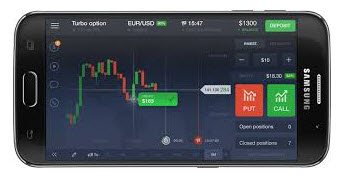
As a trader, you task is to predict if the strike price of the underlying asset will be higher or lower than a certain predetermined point when the binary option expires. If you think it will be higher, you buy a HIGHER binary option. If you think it will be lower, you buy a LOWER binary option.
Example: You believe that the strike price of CBS Corporation Common Stock listed on the New York Stock Exchange will go up today. You therefore look for a HIGHER binary option for NYSE: CBS. You find one that will expire in 4 hours and where you will get paid 100 USD if the NYSE: CBS strike price is above 57.00 when the option expires. Right now, the strike price is 54.30. You purchase this option and waits. After 4 hours, when the option expires, the NYSE:CBS is at 57.12 and you get paid 100 USD.
If you instead had reason to believe that the price of NYSE:CBS was on its way down, you would have purchased a LOWER binary option, e.g. one where you would have been paid 100 USD if the strike price of NYSE:CBS was below 52.00 when the option expired.
Up/Down
With this type of binary option, you only have to predict if the strike price of the underlying will be higher (up) or lower (down) than at the time of purchase when the option expires.
Ends In/Out
Do you think the strike price of the underlying will be within this specific span when the binary option expires? Buy an Ends In binary option. Do you think the strike price will be outside the span (either below or above, it doesn’t matter which)? Buy an Ends Out binary option.
Touch/No Touch
With the binary options explained above, only the strike price when the binary option expires determines if you get paid or not. With a Touch binary option (or its opposite, the No Touch binary option) the situation is different, since the movements of the underlying throughout the lifetime of the option is important. With a Touch binary option, you get paid if the strike price of the underlying reaches a specific predetermined point at any time throughout the lifetime of the option. One touch is all it takes!
With a No Touch binary option, you get paid if the strike price never touches that specific predetermined point throughout the option’s lifetime.
Stays In/Goes Out
These binary options are similar to Touch/No Touch binary options in the sense that the whole lifetime of the option is of importance. With a Stays In binary option, you get paid if the strike price stays within a predetermined span throughout the lifetime of the option. If you believe that the strike price wont remain within this range, you buy a Goes Out binary option instead.