
Can you day trade your way out of debt? Individual trades can make money, but that does not make trading a reliable repayment plan. Your creditors expect payments on particular dates. Markets offer no corresponding promise of profits, and a losing period can leave you with fewer resources to meet those obligations.
A trading loss does not automatically increase your loan balance or damage your credit record. The danger is what follows: borrowing to replace lost funds, missing payments or diverting money from essentials. This article examines those risks, explains the arithmetic and discusses more practical ways to address debt.
I chose DayTrading.com as an educational source because it also promotes responsible trading, including setting boundaries and recognising when trading becomes harmful. Its guides can help readers understand markets and risk. That is my reason for including the resource; I am not speaking on its behalf or suggesting that it endorses trading to repay debt.
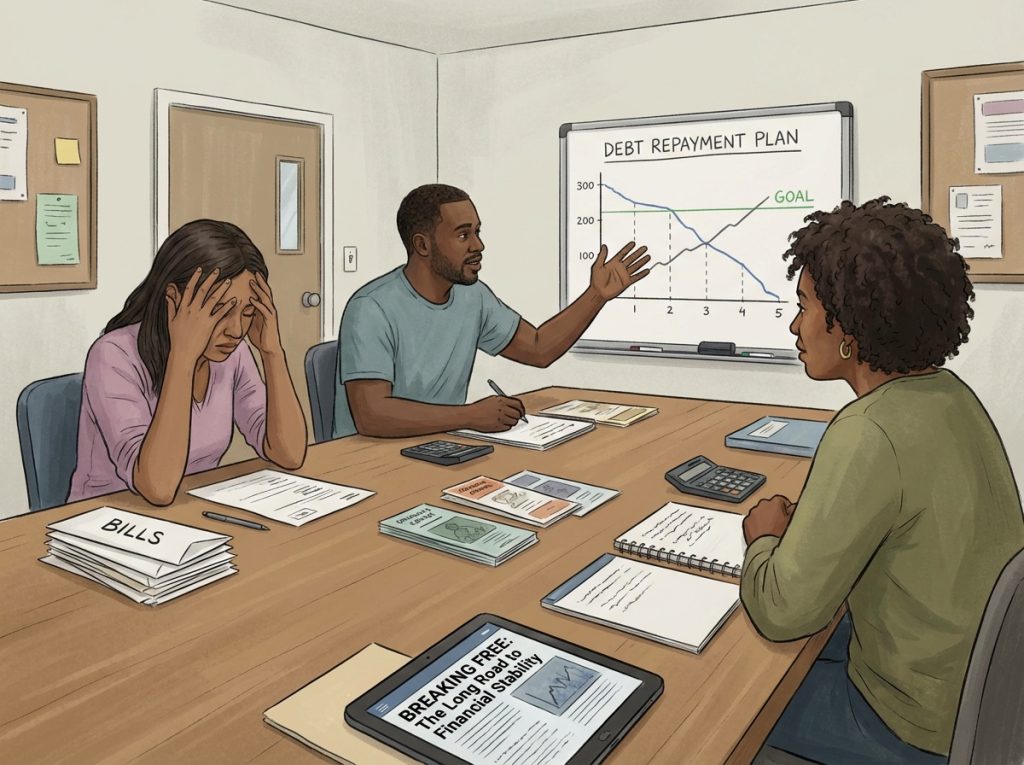
How day trading works when you have debt
Day trading involves opening and closing positions within the same trading day. Traders might use shares, currencies, futures, options or other instruments. Short holding periods avoid some overnight exposure, but they do not remove the risk of sharp price changes, trading interruptions or losses.
Trading frequently also creates repeated costs. Commissions, exchange charges, bid–ask spreads and slippage can reduce or eliminate a strategy’s apparent advantage. Slippage is the difference between the price you expect and the price you actually receive. A commission-free account is not necessarily a cost-free account.
Leverage increases exposure relative to the money committed. With securities margin, this can involve borrowing from a broker; derivatives use their own margin arrangements. If account equity becomes insufficient, positions may be closed automatically. You should not assume that the broker will call first or give you time to deposit more money.
Depending on the product, account and applicable protections, losses can exceed your deposit. Where securities are sold to repay a margin loan, the proceeds reduce the amount owed, but an uncovered deficit may remain. Borrowing separately to fund trading adds another repayment obligation regardless of the account’s performance.
Access to cash matters too. A displayed profit is not necessarily available to withdraw immediately. Positions must be closed, relevant settlement requirements met and withdrawals processed. Money needed for an upcoming bill should already be outside the trading account.
The arithmetic: expected value, costs and debt interest
The appealing story is simple: make small profits repeatedly and use them to clear the balance. The missing details are losing trades, uncertain results and the costs incurred along the way. A useful assessment starts with those details rather than a daily income target.
A winning percentage does not establish profitability
Suppose a hypothetical strategy wins 55% of its trades. Its average winner earns 0.9 units of risk, while its average loser loses one unit. Calling that risk unit R, the expected gross result is:
(0.55 × 0.9R) − (0.45 × 1R) = 0.045R per trade.
That is 4.5% of the risk unit, not a 4.5% return on the entire account. If R equals $10, the expected gross result is just $0.45 per trade. With average round-trip trading costs of $0.60, the expected net result becomes a loss of $0.15. If the account contains $1,000, the gross expectation represents only 0.045% of account equity.
These figures illustrate the calculation; they do not describe a proven strategy. An estimated win rate may come from too few trades or a backtest that fits historical conditions unusually well. Future results can differ substantially. If recorded wins and losses already include costs, do not deduct those same costs again.
Compare uncertain profits with interest savings
Consider someone with $10,000 of debt charging 18% annual interest and $5,000 available after protecting essential expenses and an appropriate cash reserve. Reducing the balance by $5,000 could avoid approximately $900 of interest over a year if that amount would otherwise remain outstanding at the same rate. Actual savings depend on payment timing, interest calculations, rate changes and any repayment charges.
Trading the $5,000 instead would require an 18% net gain simply to match that illustrative saving. Such a gain is uncertain, and a loss leaves less money available for repayment. This comparison is not a recommendation to empty emergency savings: avoiding a new expensive loan after an unexpected bill also matters.
Taxes complicate comparisons further. Treatment depends on your country, the instrument and your circumstances; day trading profits are not universally taxed as ordinary income. Keep transaction records and establish whether tax arises when a position closes, even if you leave the proceeds with the broker.
Include subscriptions, market data and any financing charges in your assessment. A service costing $50 each month absorbs $600 annually before you place a trade. Against a $2,000 account, that expense alone equals 30% of starting capital. A small account does not make recurring charges small relative to the money available.
Risk of ruin and position sizing under pressure
For someone trying to repay debt, financial failure can arrive before a trading account reaches zero. Losing the money needed for a scheduled payment is already a serious setback. Account survival and household financial stability are different measures.
Position size affects how quickly losses accumulate. Ten consecutive losses of exactly 5% of the remaining account would leave approximately 60% of the starting balance. Ten losses of exactly 1% would leave approximately 90%. These are mathematical illustrations, not estimates of how likely a losing streak is or recommended risk settings.
Nor does a planned 1% risk guarantee a 1% maximum loss. An ordinary stop order becomes a market order when triggered, so execution can occur at a worse price. A stop-limit order restricts the acceptable execution price but may not execute at all. Trading halts, price gaps and outages can undermine an exit plan.
Several positions can also behave like one larger bet. Different technology shares may fall together, while multiple currency positions can share exposure to the same economic announcement. Assess the combined loss potential rather than considering every trade in isolation.
Recovery becomes harder as losses deepen. A 30% decline requires approximately a 43% gain to recover; a 50% decline requires a 100% gain. Increasing position size to recover quickly puts even more pressure on the remaining capital.
How debt pressure can affect trading decisions
A repayment deadline can encourage you to see trading opportunities where none meet your original criteria. You might hold a losing position longer because closing it would acknowledge a shortfall, or trade again simply because the day’s earnings have not reached your target.
Early profits can create a different problem: confidence grows faster than evidence. A few successful sessions do not establish a sustainable income stream. Increasing deposits or position sizes after a lucky run can turn a manageable experiment into a threat to household finances.
A daily profit target can reinforce this pressure. Needing $100 does not mean the market offers an appropriate opportunity to earn it. Some sessions may offer no suitable trades at all. When your budget only works if you keep trading until a target is met, the budget already depends on an outcome you cannot control.
Claims about guaranteed returns, exclusive signals or effortless automated income deserve particular scrutiny. Neither software nor a paid account manager removes market risk. Check the provider’s identity, relevant regulatory status, charges and withdrawal conditions independently rather than relying on screenshots or testimonials.
Time has a cost as well. Research, screen watching and reviewing trades can displace paid work, sleep or time spent arranging affordable repayments. If trading creates secrecy, repeated loss chasing or an urge to borrow more, stop and seek appropriate debt or gambling-harm support.
Practical alternatives to trading your way out of debt
Start with a complete picture of the problem: balances, interest rates, minimum payments, arrears and essential household costs. Separate debts with particularly serious consequences for non-payment from those that mainly carry high interest. A qualified debt adviser can help establish priorities where those pressures conflict.
Not every debt creates the same urgency. An affordable long-term mortgage differs from overdue rent or expensive revolving credit. That distinction affects repayment priorities, but it does not make day trading a suitable rescue plan. Assess the whole household position, including income stability and dependants, rather than considering the interest rate alone.
Once essential commitments and required payments are covered, directing additional money toward the highest-interest eligible debt will generally reduce interest costs. Some people find clearing a smaller balance first easier to sustain, although that can cost more overall. The useful plan is affordable and does not depend on speculative profits.
Contact creditors before a missed payment where possible. Ask about hardship arrangements, reduced interest, revised payment dates or other available options. Get the terms in writing and ask about their effect on total repayment costs and credit reporting. Assistance is not guaranteed, but discussing the problem is more constructive than relying on one winning trade.
Consolidation or a balance transfer may help, but compare the total cost. A lower monthly payment can reflect a longer repayment period rather than genuine savings. Check transfer fees, introductory-rate expiry dates and the rate that follows. Securing previously unsecured debt against your home introduces an additional risk to consider carefully.
Additional work, selling unused possessions and reducing avoidable expenses can release money without exposing it to market losses. Keep an emergency buffer separate from trading funds. Longer-term diversified investing may eventually suit other goals, but it does not protect principal or make money needed for near-term repayments safe.
If you trade anyway: reducing avoidable harm
My recommendation remains to avoid day trading while in debt. The following precautions address the reality that some readers will proceed despite that recommendation. They cannot turn speculation into a dependable repayment method.
Protect the household budget first
Ask whether losing the entire trading allocation would affect bills, debt payments or essential reserves. If the answer is yes, that money is not disposable trading capital. Keeping it in a separate account does not change its purpose. Do not borrow, use credit-card cash advances or pledge essential assets to fund trades.
Use a demonstration account if the objective is learning. It allows practice without putting repayment money at risk, although simulated fills and emotions differ from live trading. Successful simulation is not proof that a strategy will generate dependable cash income.
Set boundaries before placing a trade
If you proceed with live trading, avoid leverage and products whose possible losses you cannot explain. Decide the maximum total amount you are prepared to lose, alongside session loss and time limits. Treat those limits as reasons to stop, not targets to reach or amounts to replenish automatically.
Record deposits, withdrawals, realised results and all costs. Review whether the activity is consuming money and time needed elsewhere. Keep tax provisions separate where required, and never assume that today’s apparent profit will arrive in your bank before tomorrow’s repayment deadline.
Decide in advance what would end the experiment: a breached loss limit, missed household commitment or repeated departure from your rules. An interruption to income should trigger a fresh affordability assessment. Do not increase the trading budget because circumstances have become more difficult; that is precisely when the remaining cash matters most.
Conclusion
Debt requires an affordable repayment plan; day trading supplies uncertain outcomes. Trading profits are possible, but losses, costs and timing problems can undermine the very finances you are trying to repair. I recommend focusing on manageable repayments, creditor support and sustainable income. If you trade despite that advice, protect essential money and recognise that stopping is a valid decision.