
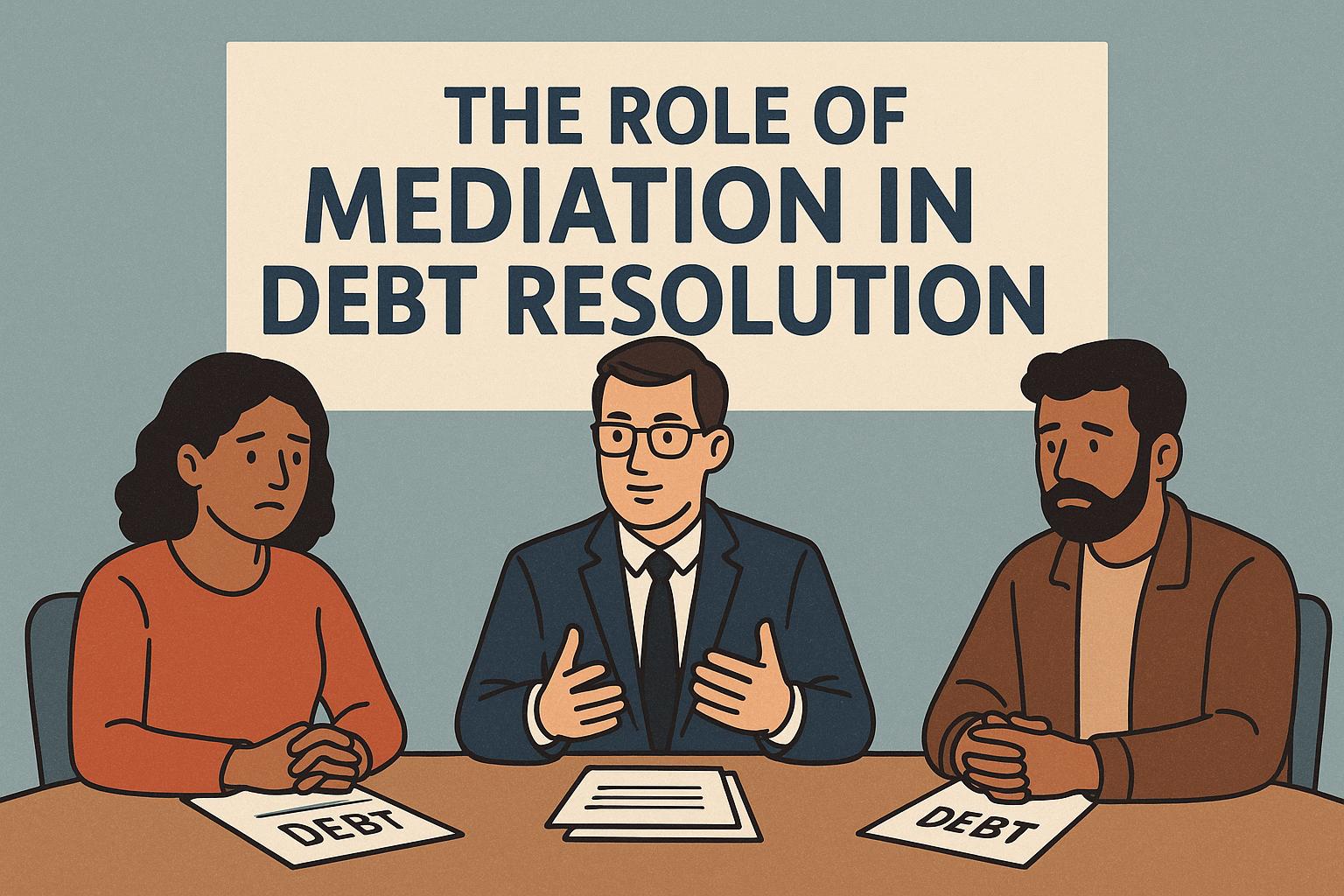
Understanding Mediation in Debt Resolution
Mediation plays a crucial role in resolving debt-related disputes. It offers an alternative approach to the adversarial process typically seen in courts, focusing instead on collaboration and mutual benefit. Mediation can be particularly useful in complex financial situations where emotions and stakes run high.
What is Mediation?
Mediation is a voluntary and confidential process where a neutral third party, known as the mediator, facilitates communication between disputing parties. Unlike a judge or an arbitrator, the mediator does not impose a solution but helps parties reach a mutually agreeable resolution. This process is often employed in debt resolution to explore creative solutions that might not be possible in a formal legal setting.
How Mediation Works in Debt Resolution
In the context of debt resolution, mediation involves creditors and debtors working with a mediator to explore settlement options. The process typically includes several key steps:
- Parties agree to mediation: Both the creditor and the debtor must consent to participate in the mediation process.
- Selection of mediator: A neutral and qualified mediator is chosen to guide discussions.
- Preparation: Both parties gather necessary documentation and outline their financial situations and objectives.
- Mediation sessions: These sessions are conducted to discuss the debt issues, explore settlement options, and negotiate terms.
- Reaching an agreement: If an agreement is reached, it is typically documented in a written settlement, which becomes a binding contract.
Benefits of Mediation in Debt Resolution
Mediation offers several advantages over traditional debt resolution methods:
- Cost-effective: Mediation is generally less expensive than litigation or arbitration, making it accessible for many individuals and businesses. The fees associated with hiring a mediator are typically lower than those of legal representation or court fees.
- Time-saving: The process can be much quicker, often resolving in weeks rather than months or years. This quick resolution is beneficial for both parties, allowing them to move forward without prolonged financial uncertainty.
- Flexibility: Mediation allows for more creative and flexible solutions tailored to fit both parties’ needs. This flexibility can result in a resolution that better suits the financial realities and long-term goals of both the creditor and the debtor.
- Confidentiality: Unlike court proceedings, mediation is a private process. The details discussed during mediation remain confidential, which can be important for parties desiring privacy regarding their financial matters.
- Preservation of relationships: By fostering cooperation and understanding, mediation can help maintain business relationships. This is particularly valuable when parties have ongoing business or personal relationships they wish to preserve.
Challenges and Considerations
Despite its benefits, mediation is not without challenges. The success of the process largely depends on the willingness of both parties to compromise and engage in open communication. Parties must come with an open mind and a genuine willingness to listen to each other’s perspectives. One potential challenge is that mediation may not always lead to a settlement if parties are unable to reconcile their differences. Additionally, because the outcome of mediation is not legally binding unless documented in a settlement agreement, parties might feel less committed to the process. For these reasons, it’s crucial that both parties enter mediation with realistic expectations and a clear understanding of the potential outcomes.
Conclusion
In conclusion, mediation offers a practical and effective method for debt resolution, with its emphasis on collaboration and tailored solutions. It requires commitment from all parties involved but can lead to satisfactory outcomes, benefiting both creditors and debtors. If you’re considering mediation for debt resolution, ensure that both parties are willing to communicate openly and are committed to finding a mutually acceptable resolution. Carefully selecting a qualified mediator and preparing thoroughly can significantly enhance the chances of a successful outcome.
For a deeper understanding of mediation processes, consider visiting ADR Services, which provides resources and detailed explanations of alternative dispute resolution methods.