
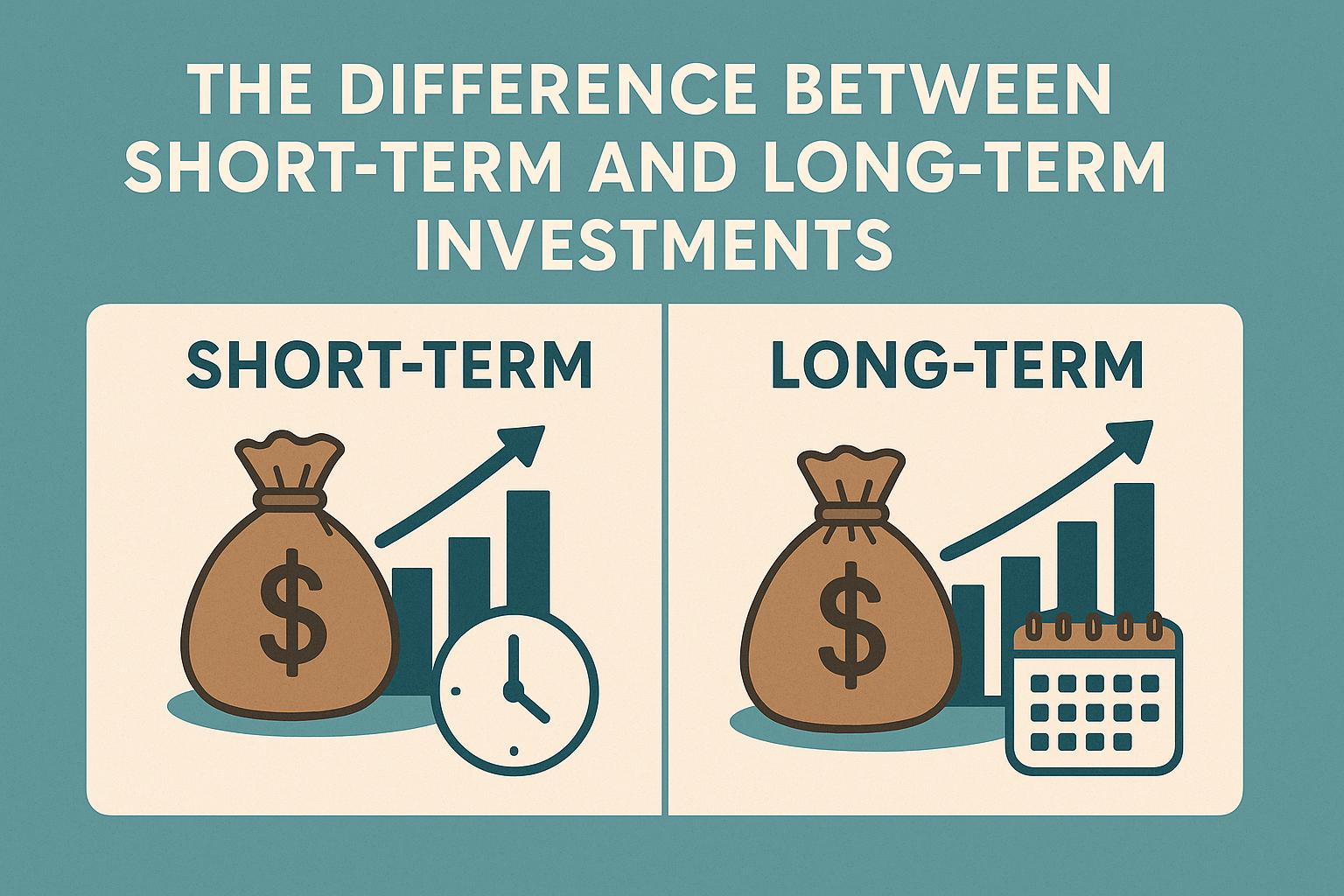
Understanding Short-term and Long-term Investments
Investing is an essential part of financial planning that offers opportunities to grow wealth over time. The realm of investments can primarily be divided into two categories: short-term and long-term investments. Each category serves distinct financial goals and accommodates different levels of risk tolerance. By grasping the differences between these two categories, investors can make well-informed decisions that align with their financial objectives.
Short-term Investments
Short-term investments are typically held for less than three years. The core objective of such investments is to provide liquidity and safety, often prioritizing the minimization of risk over the potential for high returns. These types of investments are particularly suited for investors seeking quick returns or for those who anticipate needing access to funds in the near future.
Common Short-term Investment Options
Several investment vehicles fall under the short-term category. Among them are:
- Savings Accounts: Generally low-risk and highly liquid, savings accounts offer a modest interest rate and are accessible through most banking institutions.
- Certificates of Deposit (CDs): With fixed interest rates over predetermined terms, CDs provide a slightly higher return compared to regular savings accounts but require locking the funds for a specific period.
- Treasury Bills: Issued by the government, treasury bills are considered low-risk securities with maturity periods typically ranging from a few weeks to a year.
- Money Market Funds: These funds invest in short-term and highly liquid instruments, offering a balance of safety and liquidity.
Advantages and Considerations
The principal advantage of short-term investments is their liquidity, which allows investors to quickly access their funds when necessary. They generally carry low risk, making them suitable for conservative investors wary of potential losses. Despite these benefits, short-term investments often yield lower returns than long-term ones and can be susceptible to inflation risk, which may diminish purchasing power gradually. Therefore, while considering short-term investments, it is vital to weigh these factors carefully.
Long-term Investments
On the other hand, long-term investments are intended to be held over extended periods, usually surpassing three years. The main focus of these investments is on wealth accumulation, appreciating assets, and harnessing the power of compounding returns over time.
Common Long-term Investment Options
Several asset classes are typically leveraged for long-term gains:
- Stocks: Investing in stocks can offer substantial growth potential over time, although they come with a higher degree of risk due to market volatility.
- Bonds: Providing a more stable and predictable return, bonds can be an essential part of a diversified long-term portfolio.
- Real Estate: As tangible assets, real estate investments have the potential for considerable appreciation, though they require significant upfront capital and management.
- Retirement Funds: Options like 401(k)s and IRAs offer tax advantages and are specifically designed to foster long-term growth.
Benefits and Challenges
The strength of long-term investments lies in the opportunity for higher returns, primarily due to the effects of compounding and the capacity to endure market volatility. Patience and a robust financial plan can capitalize on long-term trends and economic growth. However, these investments also carry risks such as market risk, where asset values can fluctuate, and liquidity risk, given that funds are typically inaccessible for extended periods without potential penalties or losses. Such investments are generally more suitable for investors with a higher risk tolerance who can commit to leaving their capital invested over extended durations.
Deciding Between Short-term and Long-term Investments
The decision to choose between short-term and long-term investments depends significantly on individual factors such as financial goals, risk tolerance, and time horizons. Investors who anticipate needing funds shortly may favor short-term investments for their stability and liquidity. Conversely, those aiming for long-term financial goals, such as retirement savings or substantial financial milestones, might prioritize the growth potential afforded by long-term investments.
An effective strategy may involve diversifying one’s portfolio by incorporating both short-term and long-term investment vehicles to balance risk and opportunity. Engaging with a financial advisor can provide tailored guidance and help develop a comprehensive investment strategy aligned with specific needs and circumstances.
In summary, both short-term and long-term investments hold critical places in financial strategy. Comprehending their distinctions equips investors to make knowledgeable decisions that support their financial aspirations. By understanding their unique characteristics and applications, investors can craft a dynamic—and potentially more resilient—financial portfolio.