
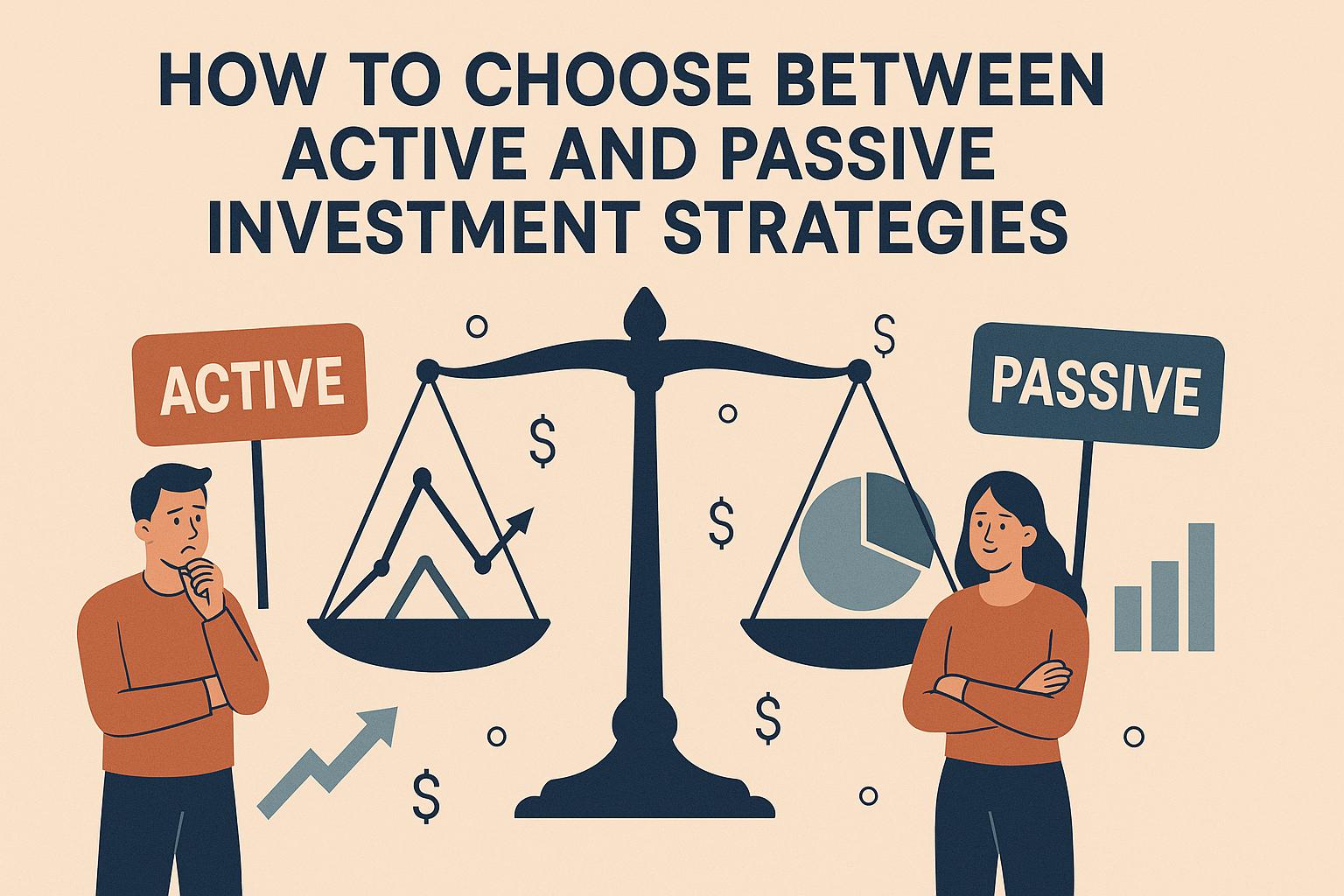
Understanding Active and Passive Investment Strategies
In the complex world of investing, choosing the right strategy is crucial for achieving financial goals. At the heart of this decision are two predominant strategies: active and passive investment approaches. Both strategies cater to specific investor needs, varying broadly in their methodologies, potential outcomes, and risk profiles. Understanding these distinct approaches is essential for financial success and stability.
Active Investment Strategy
Active investing involves a vigilant, dynamic approach, aiming to outperform standard market indices through strategic investment choices. This style relies on the investor or fund manager’s expertise to make thoughtful decisions about buying and selling assets. It’s akin to an art, where timing and selection are key.
Key Elements of Active Investment:
Research and Analysis: Profound research and analysis are the cornerstones of active investment. Investors delve into company financials, assess industry dynamics, and scrutinize economic indicators. This rigorous process guides them in identifying opportunities potentially neglected by the market, offering an edge to outperform benchmark indices.
Flexibility: The fluid nature of active investing enables participants to quickly pivot in response to market movements. For those comfortable navigating the intricacies of the market landscape, this flexibility can be advantageous. It empowers investors to seize short-term gains, though such movements come with inherent risks.
Potential for High Returns: The main allure of active investing is the promise of returns surpassing the average market rate. By selecting particular stocks or other assets, there exists an opportunity—a speculative one—for significant financial gain. This potential attracts investors willing to accept elevated levels of risk.
Active investment strategies are not without drawbacks. The associated costs, including management fees and frequent transaction expenses, can accumulate over time. Moreover, success in active investing demands extensive time and expertise—resources not available to every investor.
Passive Investment Strategy
In juxtaposition to its active counterpart, passive investing takes a restrained approach, aiming to mirror the performance of market indices over extended periods. This strategy commonly involves vehicles such as index funds or exchange-traded funds (ETFs), focusing on stable, long-term growth rather than immediate returns.
Key Characteristics of Passive Investment:
Lower Costs: Cost-efficiency is a hallmark of passive investing. This approach typically incurs lower fees owing to minimal transactions and hands-off management. For investors minding their budget, these savings are significant, allowing more capital to remain in the investment, compounding over time.
Diversification: Passive investing inherently promotes diversification, as it involves the replication of an entire index. This methodically reduces the impact of individual asset volatility by spreading risk across a wide array of stocks or assets.
Long-term Focus: Designed with a long-term horizon in mind, passive investing aims to deliver steady, consistent returns. By adhering to market performance, this strategy avoids the pitfalls of frequent buy-sell cycles, instead aiming for growth built on market stability over time.
While lacking the immediate thrill of chasing substantial short-term gains, passive investing offers a robust means of wealth accumulation and preservation over the years.
Deciding Between Active and Passive Strategies
Selecting between active and passive strategies is a profoundly personal decision, hinging upon one’s financial objectives, willingness to embrace risk, and readiness to manage their investments actively.
If Priority is Cost-Efficiency: Investors prioritizing minimal costs coupled with a desire for steady, long-term portfolio growth may lean toward passive investments. The simplicity and lower fees of this strategy make it suitable for individuals aiming for uncomplicated financial management.
If Seeking Market-Beating Returns: Those possessing keen market insight and comfortable with elevated risk may prefer active strategies in pursuit of higher-than-market returns. This approach suits confident investors willing to commit the required time and effort.
Additional Considerations
Before reaching a decision, it’s important for investors to reflect on several factors influencing the suitability of investment strategies:
Time Commitment: Active investing necessitates a considerable time investment, requiring regular monitoring of market conditions and financial trends. Investors with limited time might find passive strategies more accessible and less demanding.
Expertise: The complexity of active investing requires sophisticated market knowledge. Novice investors or those without such expertise may benefit more from the straightforward approach of passive strategies.
Market Conditions: Prevailing market conditions also play a critical role. In turbulent times, the agility of an active strategy may offer advantages, allowing investors to maneuver through fluctuations. However, it’s also during these times that some may prefer the stability passive investing can offer.
For those seeking further clarity on these strategic differences, consulting a professional financial advisor can provide tailored insights based on personal goals. Additionally, resources from reputable financial institutions may illuminate the nuances of active and passive investing, aiding in informed decision-making. As the investment market evolves, staying educated on these strategies remains a vital component of financial planning.