
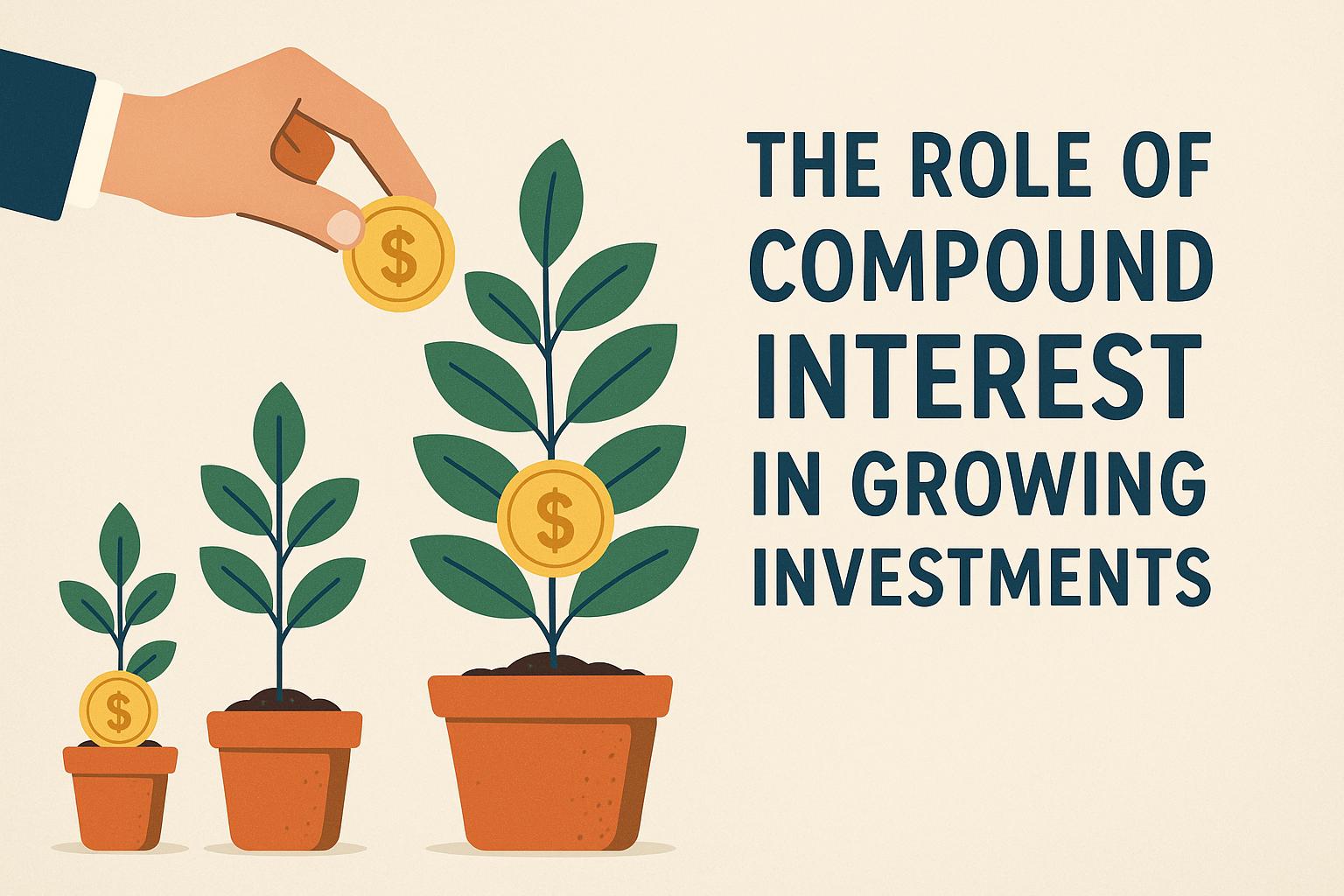
Understanding Compound Interest
Compound interest is a keystone in finance and is essential for understanding how investments grow over time. This financial principle differs markedly from simple interest due to its unique mechanism of earning interest on previously accumulated interest, in addition to the initial principal amount. This process can significantly enhance the growth potential of investments over time, often resulting in exponential increases in value.
The Mechanism of Compound Interest
At its core, compound interest functions through a cycle of periodic accumulation and reinvestment of interest earnings. When you deposit money in an account or invest in a financial product that earns interest, the generated interest isn’t merely paid out; instead, it is reinvested along with your principal amount. Subsequently, interest is calculated on the newly augmented principal, which includes the original sum and any interest previously added. This continual process of reinvestment allows your capital to grow at an increasing rate, enhancing the overall returns of the investment over time.
Formula for Compound Interest
To mathematically describe the accumulation of compound interest, we use the formula:
A = P (1 + r/n)^(nt)
This formula is foundational for any investor’s toolkit, enabling the calculation of the future value of investments or loans, making it a critical tool for financial planning. Here’s what the formula elements signify:
- A represents the future value of the investment or loan, inclusive of interest.
- P is the initial sum of the principal, either deposited as an investment or borrowed.
- r denotes the annual interest rate, expressed in decimal form.
- n indicates the frequency of compounding periods per year.
- t refers to the total time period over which the money is invested or borrowed, measured in years.
The Impact on Investment Growth
The profound benefits of compound interest become clear when considering its influence on investment growth. Several factors underscore its impact:
Exponential Growth
Compound interest is unique in its ability to spur exponential rather than linear growth. This distinction means that the longer the funds remain invested, the more pronounced the increase in investment value due to compounded earnings. Investors who take advantage of this growth model, especially when starting their investment journey early, stand to gain significant returns over longer periods.
Time as a Factor
The passage of time plays a critical role in determining the full potential of compound interest. With extended investment durations, returns can be significantly amplified, highlighting the advantage of long-term financial planning. Early investment allows for more compounding cycles, thus making a compelling case for starting to invest at the earliest possible stage in life to maximize eventual financial outcomes.
Frequency of Compounding
The frequency of compounding has a notable impact on the overall return of the investment. A greater frequency of interest compounding will lead to higher effective interest rates over the same period, enhancing the growth rate of the investment. Therefore, investments that compound interest on a more frequent basis, such as daily or quarterly, usually provide better returns compared to those with less frequent compounding, such as annually. The extent of the effect on investment values can be both substantial and interesting for prospective investors to consider.
Practical Applications
One of the easiest ways to understand the profound implications of compound interest is through its practical applications in personal finance:
Retirement Accounts
Retirement savings plans such as 401(k)s and IRAs utilize compound interest as a central growth feature. Regular contributions to these accounts, coupled with the compounding of interest, can lead to substantial savings upon retirement. Developing a habit of consistent contributions early in a career is highly effective in building a robust retirement fund, which will benefit greatly from the cumulative effect of compounding over decades.
Educational Savings
Similar principles apply to education-focused savings plans, such as 529 plans, where compound interest works to ease the financial burden of future expenses. Starting such a savings plan when a child is young allows ample time for interest to accumulate, reducing the need for higher contributions by parents. Maximizing the effects of compounding in this context can significantly mitigate the rising costs associated with higher education.
Further Reading
Understanding the broader implications and strategies associated with compound interest requires further engagement with available resources. For those looking to deepen their knowledge of investment strategies and the power of compounding, Investopedia offers extensive insights into various financial instruments and investment methodologies.